
Some actors arrive at a session and wait to be directed. Jeremy Zinunu arrives already fluent — the quiet, generous fluency of someone who has stood behind a camera as well as in front of one.
His route into the industry reads like a screenplay of its own. A French actor and model, he started out in Hong Kong — commercials, stage work, screen — before moving to London and training at the Identity School of Acting. And between acting jobs he doesn't wait: he writes and directs his own short films. That puts him in the most interesting category this industry currently has — the actor who makes work instead of waiting for permission to.
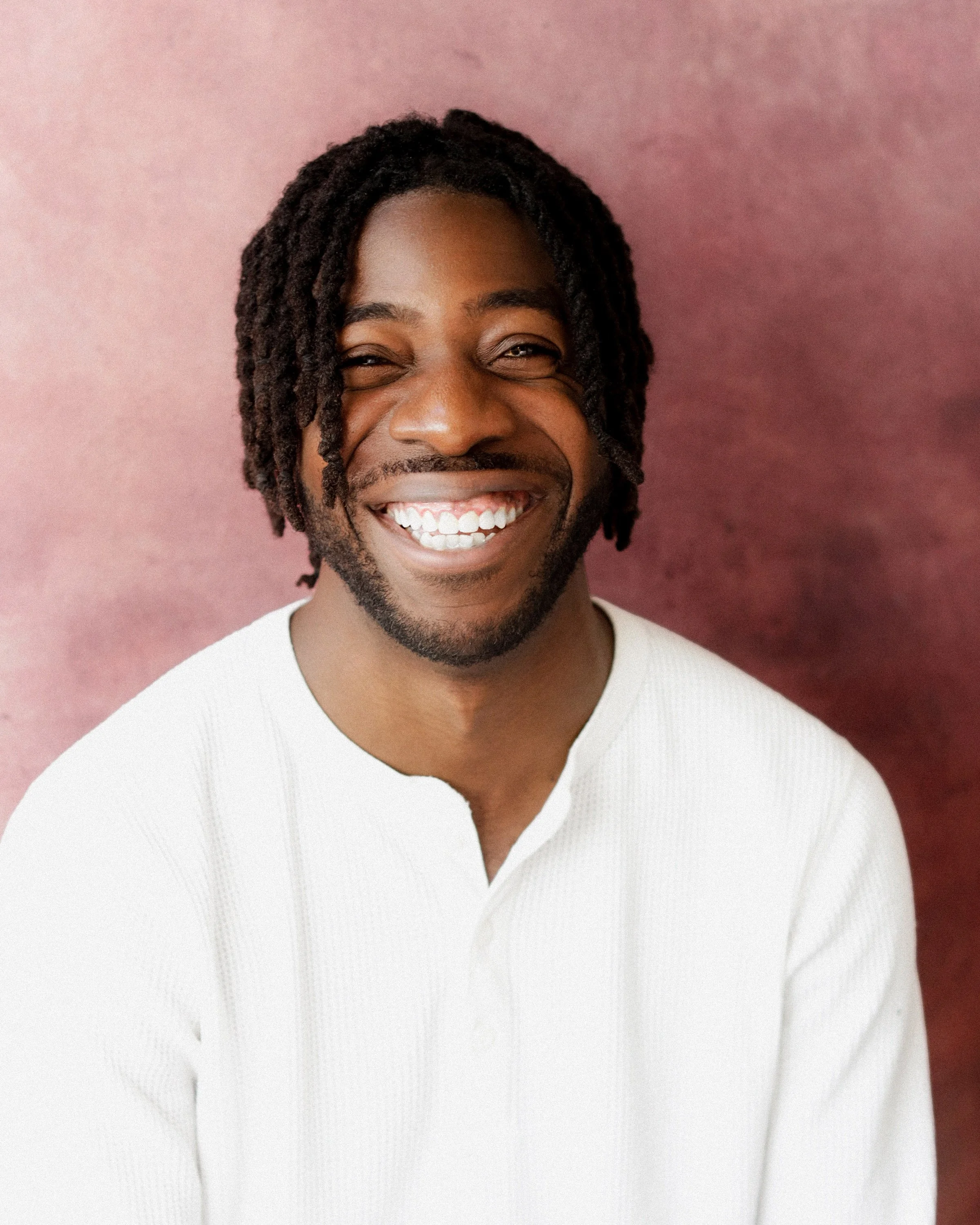
The laugh
We've done a few sessions together now, and the pattern never changes: the laugh gets to the studio before he does. So we built this frame around it — dusty pink canvas, a white waffle henley, nothing sharp anywhere — and let the warmth carry the whole picture. Casting directors scroll past a thousand guarded faces a day. This is not one of them. It's the frame for the roles that need someone the audience trusts on sight.
Photographing a filmmaker
My first career was cinematography, and sessions with Jeremy run on the shorthand that comes from both of us having lived behind the lens. He knows why I'm moving a light before I've moved it. He holds an eyeline like someone who has directed eyelines. There is no faster route to an honest frame than a sitter who understands exactly what the camera is doing — and no better company in the studio while getting there.
Why it matters
The industry has changed shape. Casting rooms became self-tapes; waiting became making. The actors moving fastest are the ones generating their own material, and their headshots need to carry that — not just castability, but initiative. A face that says: give me the part, or I'll write it myself.
That is what we photographed.
A session built for range and intent is what the Director's Session is for.
Photographed at my studio in Seven Sisters, North London.